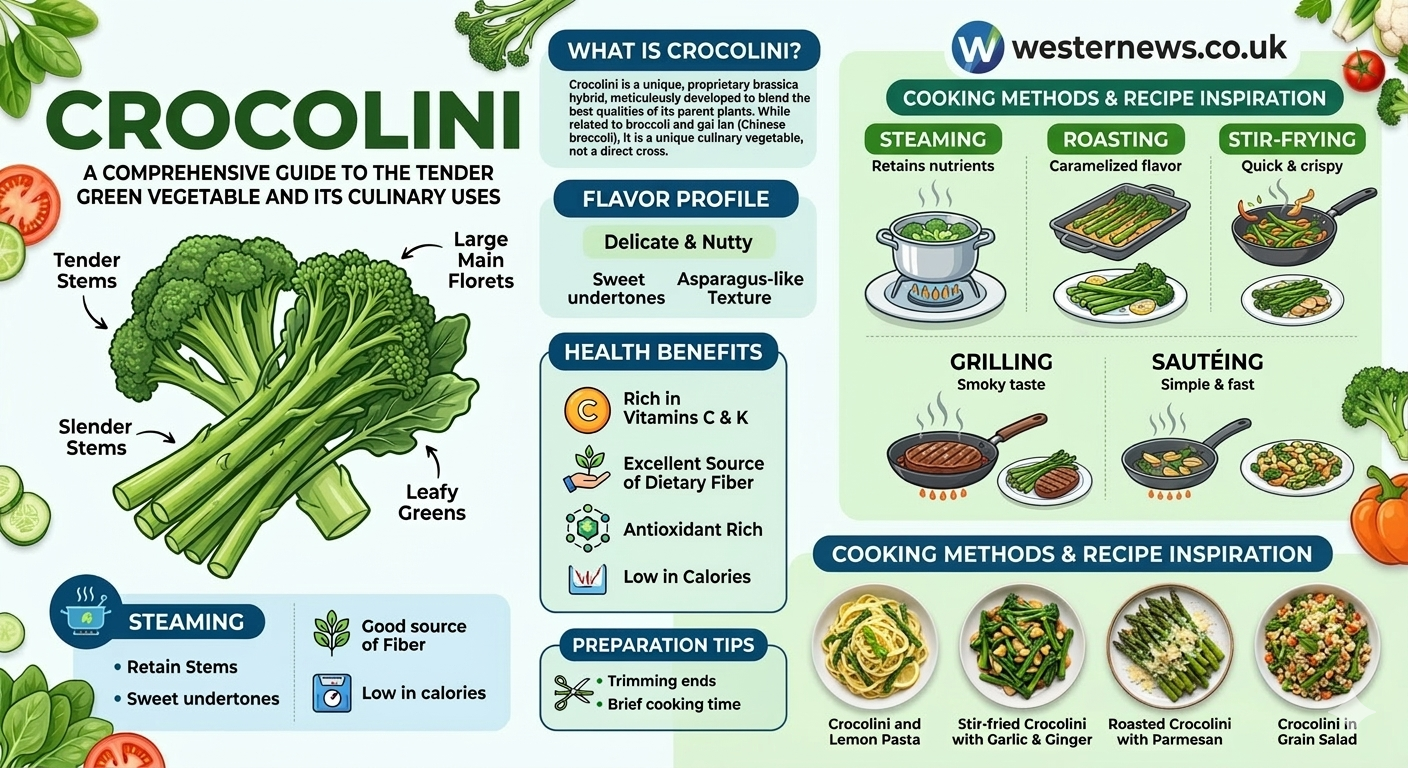
Crocolini is an increasingly popular term in the culinary world, yet many people are unfamiliar with it. At first glance, it may seem like just another trendy green vegetable, but crocolini has unique qualities that set it apart. Often confused with broccolini or tenderstem broccoli, crocolini is valued for its delicate texture, mild flavor, and versatility in cooking. Beyond its culinary applications, the word crocolini has also appeared in lifestyle and creative contexts, adding a cultural and aesthetic dimension to its meaning. This guide explores everything you need to know about crocolini, including its characteristics, nutrition, cooking methods, and cultural significance.
What is Crocolini?
Crocolini is a green vegetable that belongs to the same family as broccoli and Chinese kale. It is a hybrid, typically created by crossbreeding broccoli and gai lan, also known as Chinese broccoli. This combination produces a vegetable with slender, tender stems and small, delicate florets. Crocolini has a mild and slightly sweet flavor, which makes it more approachable than traditional broccoli. Both the stems and the florets are edible, and the vegetable cooks quickly, making it a favorite among home cooks and professional chefs alike.
Despite its rising popularity, crocolini is not officially recognized in traditional dictionaries. Its name has gained traction primarily through culinary communities, food blogs, and social media, where it is often used interchangeably with broccolini or tenderstem broccoli. The term itself evokes a sense of European charm, which may contribute to its growing appeal in kitchens and restaurants.
Appearance and Flavor
The visual appeal of crocolini is one of its most attractive qualities. The stems are long and slender, while the florets at the top remain small and compact. Its vibrant green color is maintained even after cooking, giving dishes a fresh and appealing look. The flavor is mild and slightly sweet, lacking the bitterness often associated with traditional broccoli. This balance of taste and texture makes crocolini versatile, allowing it to complement a wide range of ingredients and cooking styles. The stems remain tender while providing a slight crispness, and the florets cook evenly, ensuring a consistent texture throughout.
Nutritional Value
Crocolini is rich in nutrients, similar to other cruciferous vegetables. It is an excellent source of vitamins and minerals, including vitamin C, which supports the immune system, and vitamin K, which contributes to bone health. Crocolini also contains fiber, which aids digestion and promotes a feeling of fullness, as well as folate and iron, important for cell growth and energy production. Beyond vitamins and minerals, crocolini contains beneficial plant compounds, such as sulforaphane, known for its potential anti-inflammatory and detoxifying effects. Regular consumption of crocolini can support heart health, aid digestion, assist in weight management, and contribute to overall well-being.
Cooking Crocolini
One of the reasons crocolini has become popular is its versatility in the kitchen. It can be prepared in a variety of ways while retaining its vibrant color and tender texture. Sautéing crocolini with olive oil and garlic is a quick and simple method that highlights its natural sweetness. Roasting crocolini with herbs and lemon zest brings out caramelized flavors and adds depth to its mild taste. Steaming the vegetable preserves its nutrients and results in a clean, fresh flavor. Grilling crocolini adds a smoky quality, making it a perfect accompaniment to meats or fish. Its adaptability allows it to be incorporated into pasta dishes, grain bowls, salads, and stir-fries.
Crocolini pairs well with a range of flavors. Light seasoning with garlic, olive oil, and lemon allows its natural taste to shine. It also complements Asian-inspired sauces with soy, ginger, and sesame. Herbs like basil, parsley, and dill enhance its freshness, while citrus zest adds brightness. The vegetable is typically available year-round, though it is most tender during cooler months when it is at peak season. When selecting crocolini, look for firm, vibrant green stalks and avoid any yellowing or wilted florets. It is best stored in the refrigerator, wrapped in a slightly damp towel or a breathable bag, and used within a few days for optimal freshness.
Crocolini Compared to Broccoli and Kale
Crocolini is often compared to both broccoli and kale because it shares characteristics with each. Compared to broccoli, crocolini has thinner, more tender stems and a milder, sweeter flavor. It also cooks more quickly and retains its vibrant color better. In comparison to kale, crocolini is softer and less fibrous, making it easier to eat raw or lightly cooked. While kale is often used in hearty dishes or braised preparations, crocolini works well in light sautéed or roasted dishes, adding subtle flavor and texture without overpowering other ingredients. These qualities make crocolini an appealing choice for both new vegetable eaters and seasoned cooks seeking versatile greens.
Crocolini in Contemporary Cuisine
The rise of crocolini in modern kitchens is linked to broader food trends emphasizing plant-forward diets, health-conscious eating, and visual presentation. Its quick cooking time and mild flavor make it suitable for a variety of cuisines, from Mediterranean and Italian dishes to Asian-inspired stir-fries. Chefs value crocolini for its ability to elevate a dish visually and nutritionally, while home cooks appreciate its simplicity and adaptability. As culinary interest in nutrient-dense, versatile vegetables continues to grow, crocolini has become a staple in both casual and professional cooking environments.
Crocolini Beyond the Kitchen
Interestingly, crocolini has also gained attention outside of culinary contexts. In lifestyle and design communities, the word is sometimes used metaphorically to describe an aesthetic and philosophy rooted in simplicity, texture, and mindful living. It represents an approach that values quality, intentional choices, and a slower pace, emphasizing the enjoyment of everyday experiences. In design, crocolini-inspired concepts focus on natural materials, muted colors, and objects that age gracefully rather than quickly lose their appeal. Some brands and lifestyle blogs have adopted the name to convey these values, using it as a symbol of authenticity, craftsmanship, and aesthetic care.
Common Misconceptions
Because crocolini is relatively new in popular culture, several misconceptions exist. Some people mistakenly believe it is a completely new species, when in reality it is a hybrid vegetable developed through selective crossbreeding. Others assume it is genetically modified, but crocolini is created through traditional breeding methods rather than genetic engineering. Additionally, many associate the term solely with food, but its usage has expanded into lifestyle, design, and digital culture, reflecting broader trends in community-driven language and branding.
Conclusion
Crocolini is a fascinating example of how food, language, and culture intersect. As a vegetable, it offers tender texture, mild flavor, and nutritional benefits that make it ideal for a wide range of dishes. Its rising popularity in kitchens around the world is matched by its appearance in lifestyle and creative contexts, where it symbolizes simplicity, texture, and thoughtful living. Whether encountered in a grocery store, a recipe, or a design blog, crocolini invites curiosity and appreciation. Exploring crocolini in both culinary and cultural terms offers insight into how modern communities adopt and adapt new ideas, creating value that goes beyond the plate. Cooking crocolini is a simple way to enjoy a vibrant, healthy, and versatile green, while engaging with its broader aesthetic significance adds depth and inspiration to everyday life.