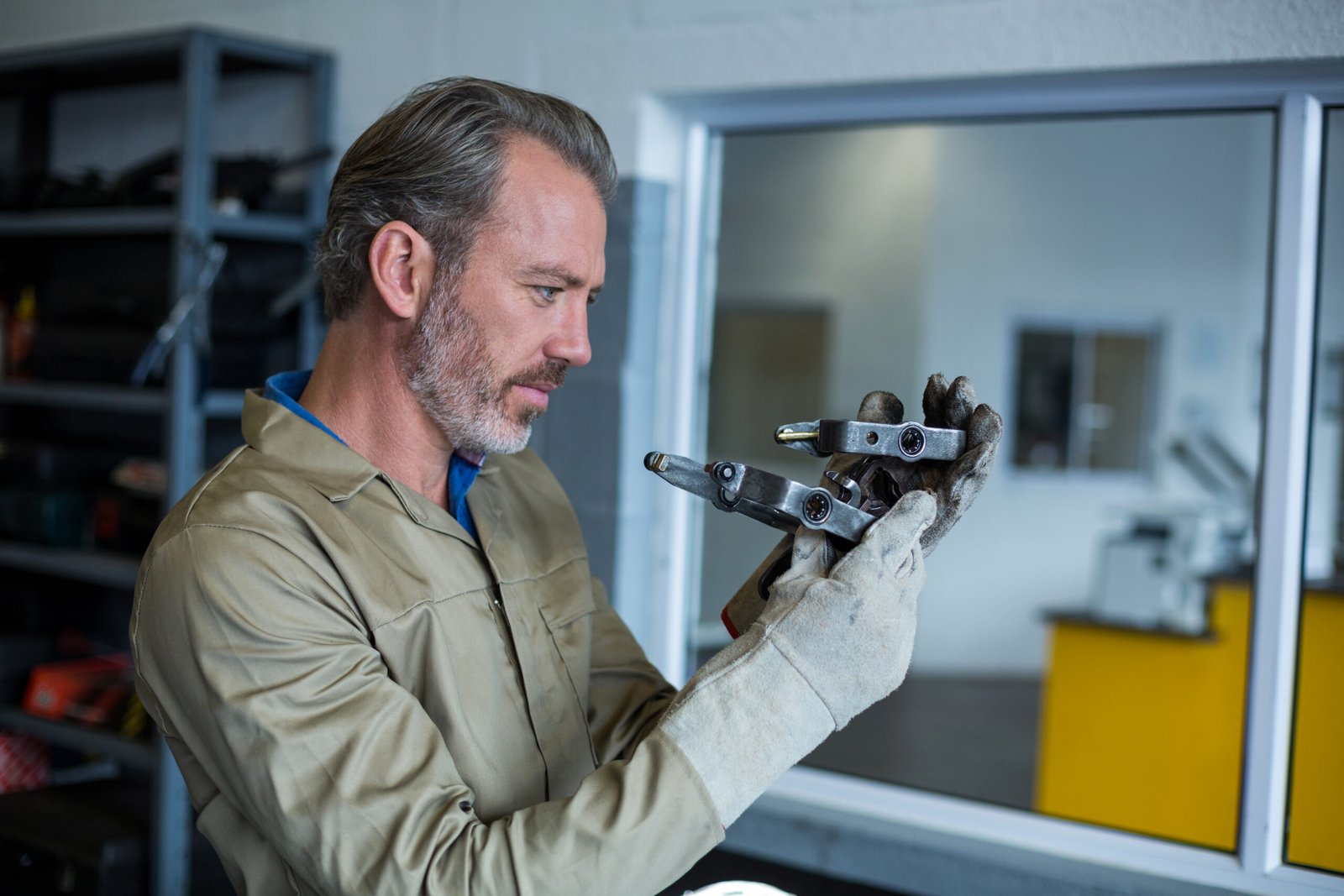
Custom casting is often the most efficient way to produce parts that meet the unique dimensions, geometries, and mechanical requirements of modern industrial equipment, which standard off-the-shelf parts cannot provide. By choosing a custom casting manufacturer with experience, businesses can ensure that their products are of high quality, have optimized costs, and deliver reliable performance over the long term, regardless of the number of products they are able to produce.
This guide describes how custom casting works, the primary manufacturing methods, typical materials, and the major industries that rely on this manufacturing process.
Understanding Custom Casting and The Manufacturing Process
There’s more to custom casting than pouring molten metal into a mold. In all projects, engineering evaluation, process selection, materials optimization, and quality control processes have to be undertaken to manufacture parts that satisfy the dimensional and performance requirements.
What Is Custom Casting?
Custom casting refers to the production of metal parts based on customer-specific drawings, specifications, tolerances, and functional requirements. Custom castings are made specifically for the needs of a particular industrial application, assembly, or machine, as opposed to standard cast products, which are produced for general purposes.
During the design phase, manufacturers typically work with customers to optimize the casting design for strength, manufacturability, and cost efficiency before production begins.
How The Custom Casting Process Works
Although various casting methods exist, the following basic steps are commonly required:
- Engineering review and design evaluation
- Pattern or mold preparation
- Material selection
- Melting and pouring
- Cooling and solidification
- Cleaning and finishing
- Machining if required
- Final inspection and testing
Each stage affects the quality, accuracy, and the mechanical properties of the final product.
Major Casting Processes Used By Manufacturers
A variety of production methods can be employed for various applications. The selection of the process depends on production volume, part complexity, required tolerances, and material selection.
- For large industrial parts and low to medium production volumes, sand casting is a common method to use. It is highly flexible for complex geometries and large dimensions.
- Investment casting provides excellent dimensional accuracy and fine surface finishes. Used widely for making parts with a complicated shape that need a high degree of precision.
- Die casting can be used to produce large quantities of non-ferrous metals like aluminum and zinc. It provides high repeatability, and production cycles are reduced.
Lost foam casting is often selected for complex components where reduced machining requirements are a key consideration.
Design Considerations Before Production
Proper engineering design is the key to success in cast components. During the design process, manufacturers assess the thickness of the wall, draft angles, inner dimensions, machining allowances, and shrinkage. Manufacturing defects are minimized, and production efficiency is improved through early design optimization.
Quality Control Throughout Manufacturing
Unlike regular manufacturers, professional manufacturers conduct inspections throughout the production process and not just when finished. Dimensional inspections, chemical composition analysis, hardness testing, non-destructive testing, and mechanical property verification guarantee that each casting meets specifications.
Choosing The Right Materials For Custom Casting
The selection of materials will have a direct impact on product strength, corrosion resistance, wear resistance, weight, and cost of production. An experienced manufacturer can assist the customer in balancing these components for the purpose they are being used for.
Carbon Steel Castings
Carbon steel is widely used for its strength and structural toughness in heavy-duty industrial components. It is very commonly used for machinery frames, construction equipment, mining parts, and industrial hardware.
Manufacturers have different specifications to balance hardness and processing characteristics; many grades, referred to as carbon grades, exist.
Stainless Steel Castings
Stainless steel is highly resistant to corrosion and also strong. It is suitable for chemical processing, food equipment, marine applications, medical devices, and pharmaceutical machinery. It is durable and can withstand harsh environments, although it is often more expensive than carbon steel.
Alloy Steel Castings
Carefully controlled alloying elements enhance the wear resistance, fatigue strength, and high-temperature resistance of all alloy steels. The materials are often used in heavy machinery, power generation units and high load industrial equipment.
Cast Iron Materials
The use of gray iron, ductile iron, and other cast iron materials remains popular due to their excellent castability and relatively low production costs. Products such as pump houses, machine bases, valve bodies, engine parts, and municipal infrastructure products are made from cast iron.
Aluminum And Other Non-Ferrous Metals
Aluminum castings offer lightweight construction, corrosion resistance, and thermal conductivity. Additionally, copper alloys, bronze, and brass are chosen for specialized industrial uses that call for electrical conductivity or improved resistance to corrosion.
The selection of materials should always be according to the operating conditions rather than based on the lowest raw material cost.
Important material selection factors include:
- Mechanical strength: Supports expected operating loads and service conditions.
- Corrosion resistance: Extends service life in harsh environments.
- Manufacturing efficiency: Balances performance requirements with production cost.
The competent custom casting manufacturer can even suggest the most appropriate alloy based on engineering requirements and their life.
Where Custom Castings Are Used And How To Select The Right Manufacturing Partner
Standardized components exist from different manufacturers and are readily available in most industrial fields. Almost every industrial sector is catered to by custom cast components, allowing equipment designers to optimize equipment without being constrained by standard component sizes.
Industrial Machinery
Custom castings are commonly used in the manufacture of industrial equipment housings, frames, brackets, gear cases, rollers, and structural components. Custom designs enhance equipment integration and minimize unnecessary machining.
Mining And Construction Equipment
Mining and construction machinery operates in high-load and abrasive environments. With robust cast parts, crushers, excavators, loaders, conveyors, and drilling equipment get the strength they require. Equipment service life can be greatly enhanced by using the correct material.
Energy & Power Generation
Cast valves, pump bodies, turbine parts, and pressure-resistant structural components are used in power plants and other systems that harness renewable energy, as well as in oil and gas facilities. Quality, reliability, and the ability to cast for long periods of time are critical, as these parts are often used in continuous service.
Transportation & Automotive Manufacturing
Cast parts are used in the automotive industry for engine blocks, transmission housings, suspension components, brake components, and chassis systems. Custom casting enables lightweight designs while maintaining high structural strength.
Frequently Asked Questions
What Are The Advantages Of Custom Casting Over Standard Components?
Custom casting enables manufacturers to create parts that fit fully into the assembly, use the appropriate materials, and are optimized for the desired performance, minimizing the need for assembly changes and enhancing equipment effectiveness.
Which Casting Process Is Best For Complex Parts?
An investment casting process is typically used for complex parts and high dimensional accuracy, and sand casting is typically used to cast larger parts.
How Do I Choose The Right Custom Casting Manufacturer?
Evaluate engineering support, manufacturing experience, inspection capabilities, available materials, machining services, quality certifications, and production capacity rather than selecting solely on price.
Conclusion
Choosing the appropriate custom casting process, material, and manufacturing partner plays a critical role in product quality, production efficiency, and long-term operating reliability. Understanding available casting methods and material characteristics enables businesses to make informed engineering and procurement decisions.
An experienced custom casting manufacturer delivers more than finished components—they provide engineering expertise, process optimization, quality assurance, and reliable production support that helps industrial customers reduce costs while improving overall equipment performance.