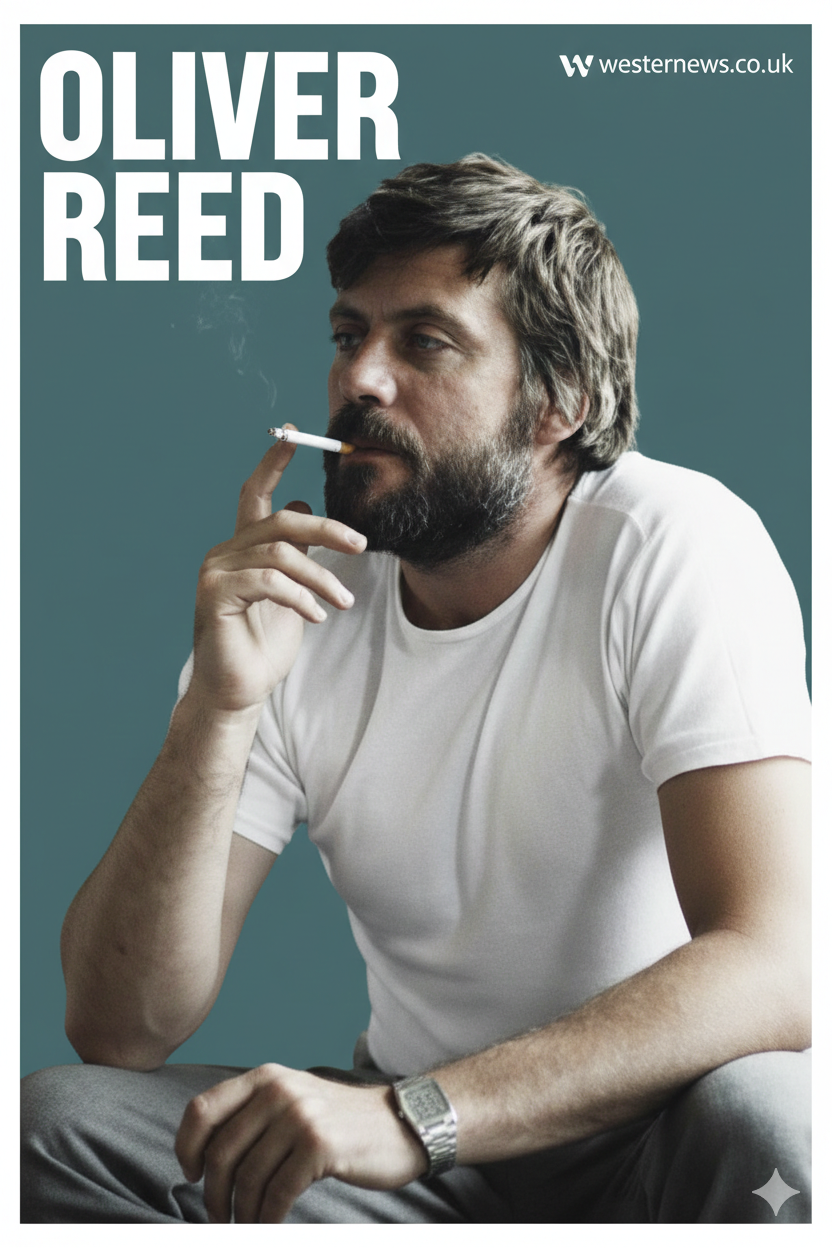
Introduction: The Enigmatic Actor
Oliver Reed, born on February 13, 1938, in Wimbledon, London, was one of the most charismatic and controversial British actors of his time. He is often remembered for his larger-than-life personality both on and off the screen. Reed was not just known for his captivating performances in films, but also for his wild, rebellious lifestyle, which often overshadowed his acting career. With a series of iconic roles in films such as Gladiator and The Three Musketeers, Oliver Reed left a lasting impression on the world of cinema. This article delves deep into his life, career, death, and legacy, exploring the various aspects of his filmography and his impact on the industry.
Oliver Reed Early Life and Career Beginnings
Oliver Reed was born to a theatrical family, which played a significant role in shaping his career. His grandfather, Herbert Beerbohm Tree, was a celebrated actor, and his uncle, Sir Carol Reed, was a renowned film director. Raised in an environment immersed in the arts, Reed developed an early interest in acting. However, he was not initially destined for the stage; before committing to acting, Reed worked a variety of odd jobs, including as a laborer and bartender.
Reed’s entry into acting came in the 1950s when he began appearing in British television series. His first major breakthrough came in the 1960s, when he began to be noticed for his performances in films. His early work in British cinema, particularly in the horror genre, helped establish him as an actor with a commanding presence. His striking looks, powerful voice, and brooding demeanor quickly made him a favorite for roles requiring a rugged, intense character.
The Rise to Stardom: Iconic Films and Roles
The Curse of the Werewolf (1961)
One of Reed’s earliest breakout roles was in The Curse of the Werewolf, a Hammer Horror classic where he portrayed a man who becomes a werewolf after being cursed. This film, released in 1961, allowed Reed to showcase his ability to embody dark and powerful characters, setting the tone for his future roles.
Oliver! (1968)
Oliver Reed gained widespread recognition for his portrayal of the villainous Bill Sikes in the Academy Award-winning film Oliver! (1968), a musical adaptation of Charles Dickens’ Oliver Twist. Reed’s portrayal of the brutal character earned him critical acclaim and established him as a major star in British cinema. His performance remains one of the most memorable in the film, standing out amidst a stellar cast.
The Devils (1971)
Another major milestone in Reed’s career came with his role in Ken Russell’s controversial film The Devils (1971). The film, which explored the sexual and religious repression of the 17th century, was highly provocative, and Reed’s portrayal of a troubled priest was both intense and disturbing. The film was banned in several countries due to its graphic content, but it gained a cult following, with Reed’s performance regarded as one of his finest.
The Three Musketeers (1973)
In 1973, Reed starred as Athos in the big-budget adaptation of The Three Musketeers. Directed by Richard Lester, the film was a critical and commercial success, and Reed’s portrayal of the brooding, yet honorable Musketeer made him a favorite in the swashbuckling genre. Reed reprised his role in the 1974 sequel, The Four Musketeers, further solidifying his status as a leading man in Hollywood.
Gladiator (2000)
One of Reed’s final and most iconic roles was in Ridley Scott’s Gladiator (2000). He played the character Proximo, a seasoned gladiator who mentors the film’s protagonist, Maximus, portrayed by Russell Crowe. Reed’s performance as the grizzled, hard-drinking former gladiator was memorable, adding depth to the film’s exploration of honor and survival in ancient Rome. His death during the filming of Gladiator led to the use of CGI to complete his scenes, a groundbreaking moment in film history.
Oliver Reed Personal Life: A Tumultuous Journey
Oliver Reed’s life was marked by as much controversy as his acting career. He became infamous for his heavy drinking and reckless behavior, both of which were well-documented in the press. His tendency to drink excessively often led to altercations with fellow actors and the media, making him a tabloid sensation.
Reed’s personal life was equally tumultuous. He was married twice, first to Kate Byrne, with whom he had a son, Mark Reed, and then to Jacquie Daryl, with whom he had a daughter, Sarah Reed. Despite his personal struggles, Reed remained a beloved figure in the acting world for his undeniable talent and screen presence.
The Death of Oliver Reed: A Tragic End
On May 2, 1999, Oliver Reed passed away at the age of 61, just months before the release of Gladiator. His death came as a shock to the world, as it occurred while he was on location in Malta filming his scenes for the film. Reed died from a heart attack while enjoying a drinking session with friends in a local pub. His heavy drinking over the years was thought to have contributed to his sudden death.
Reed’s death left a void in the film industry, and his final performance in Gladiator marked the end of an era for one of Britain’s most iconic actors. His death was a stark reminder of the dangers of substance abuse and the unpredictable nature of life in the limelight.
Oliver Reed in Gladiator: Legacy through CGI
In an effort to complete the scenes of his character in Gladiator, Ridley Scott and the filmmakers turned to CGI technology. Reed’s death left a gap in the film, and the filmmakers used a combination of digital effects and body doubles to finish his remaining scenes. This was one of the first high-profile uses of CGI to complete a deceased actor’s performance in a major film, setting a precedent for future productions.
Reed’s character, Proximo, was a fan favorite, and his death during filming raised questions about the ethical use of technology in film. Nevertheless, the completed scenes, which were painstakingly created using CGI, ensured that Reed’s legacy remained intact, even after his death.
The Legacy of Oliver Reed
Oliver Reed’s legacy in the world of cinema is undeniable. He remains an iconic figure known for his intense, larger-than-life characters, as well as his unique personality that captivated audiences both on and off the screen. While his life was filled with controversy and personal struggles, his contributions to film continue to be celebrated.
Reed’s legacy lives on through the films he left behind, from his early roles in Hammer horror to his memorable performances in classic swashbuckling adventures and historical epics like Gladiator. His career is a testament to his versatility as an actor and his ability to leave an indelible mark on every film he was a part of.
Interesting Facts and Trivia
- Reed’s portrayal of Bill Sikes in Oliver! remains one of his most iconic roles. The character is infamous for being one of the most terrifying villains in British cinema.
- Despite his tumultuous personal life, Reed’s on-screen performances were always marked by an intensity and commitment to his craft that made him a respected actor.
- Reed was involved in several wild stories during his life, including his legendary encounters with fellow rock stars like Keith Moon, with whom he shared a notorious bond of heavy drinking and mischief.
- Reed’s final film, Gladiator, was one of the most successful films of 2000 and earned five Academy Awards. His character, Proximo, remains one of the most memorable parts of the film.
Conclusion
Oliver Reed’s contributions to cinema are far-reaching. His performances in films such as The Three Musketeers, The Devils, and Gladiator solidified his place in cinematic history. Reed’s death at a young age cut his career short, but his impact on the industry and his unforgettable roles continue to be appreciated by film lovers worldwide. His tumultuous life and the tragic end serve as a poignant reminder of both the highs and lows of fame, but also of the talent and passion that can never be overshadowed by personal demons.
Through his roles, particularly in films like Gladiator, Reed remains a beloved figure in the history of cinema, and his legacy is one that will continue to influence future generations of actors and filmmakers.